


Building a high-traffic commercial car park today means balancing performance, compliance, and sustainability. From warehouses and shopping centres to industrial yards and sports facilities, designers are under increasing pressure to deliver car parks that perform reliably under heavy loads, meet stormwater requirements, and minimise environmental impact.
Traditionally, asphalt and concrete have been the default choice. Yet, as weather extremes intensify and councils tighten stormwater regulations, many developers are now looking for alternatives that do more than just provide a hard surface.
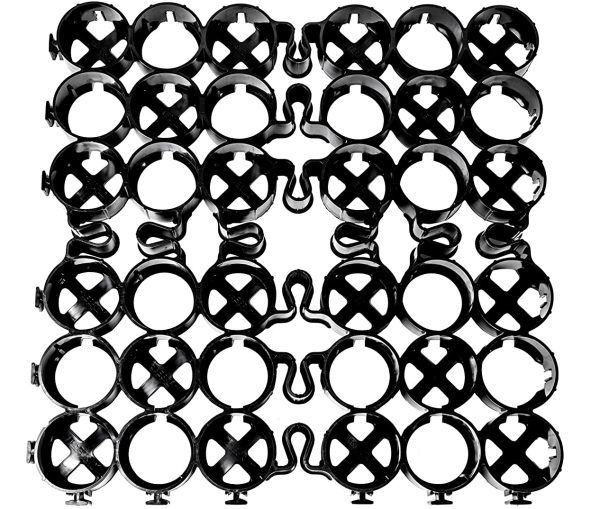
One solution leading the way is commercial permeable paving – particularly systems like TRUEGRID PRO PLUS S-Flex 48, designed for heavy-load commercial use. Let’s explore why permeable paving has become a superior choice for Australian car park design.
The Changing Demands of Commercial Car Park Design
Commercial car parks today face challenges that go beyond basic functionality. They must:
- Handle consistent heavy vehicle traffic such as forklifts, trucks, and delivery vehicles
- Support compliance with local council stormwater and permeability standards
- Minimise heat island effects
- Provide safe, accessible surfaces for users
- Deliver long-term performance with minimal maintenance
With Australia’s urban flooding on the rise “100-year floods” now occurring every few years the pressure to improve stormwater performance is only increasing. This is where asphalt often falls short.
Why Asphalt is Losing Ground
Asphalt surfaces are impervious. They prevent rainwater from soaking into the ground, forcing it to run off into storm drains. This contributes to flooding, erosion, and pollution – all issues councils and developers are keen to reduce.
Beyond drainage, asphalt comes with other drawbacks:
- High maintenance costs: Regular resurfacing and crack repair are inevitable.
- Heat absorption: Asphalt contributes significantly to the urban heat island effect, raising local temperatures.
- Environmental impact: Asphalt is petroleum-based and emits volatile organic compounds (VOCs) during production and application.
For councils aiming for sustainability targets and developers seeking low-lifecycle-cost solutions, asphalt is increasingly hard to justify.
The Permeable Advantage
Permeable paving systems like TRUEGRID are engineered to mimic natural soil – allowing rainfall to pass through the surface, infiltrate into the sub-base, and recharge groundwater.
This design delivers multiple benefits:
- Flood prevention: By detaining and filtering water beneath the surface, permeable systems significantly reduce runoff volumes.
- Pollution control: Water infiltrating through TRUEGRID filters out hydrocarbons, heavy metals, and suspended solids, improving water quality before it enters local waterways.
- Compliance made simple: Councils increasingly require on-site stormwater detention. TRUEGRID can act as both the surface and detention structure, eliminating the need for costly retention basins.
- Temperature reduction: Unlike asphalt, permeable pavements reduce surface heat, improving comfort and reducing cooling costs nearby.
TRUEGRID’s surface infiltration rate exceeds 20,000 mm/hour – enough to handle intense Australian downpours.
Real-World Performance in Heavy-Traffic Car Parks
The benefits of permeable paving aren’t theoretical. TRUEGRID’s Australian projects demonstrate how the system performs in demanding commercial environments.
1. Stokes Wheeler Commercial Car Park – Park Ridge, QLD
Faced with council restrictions limiting impervious surfaces to 80%, Stokes Wheeler Construction needed a load-bearing solution for forklift and truck traffic. By using TRUEGRID PRO PLUS S-Flex 48, the team reclaimed 500 m² of usable space while maintaining compliance with permeability requirements.
The pavers provided forklift-ready strength, stormwater compliance, and a durable surface for a scaffolding yard – all completed in just five days.
2. Tallebudgera Pony Club – Flood-Resistant Car Park, QLD
Frequent flooding rendered this equestrian club’s car park unusable. TRUEGRID provided a stable, flood-resilient surface that remained functional even when inundated. The system allowed stormwater to infiltrate naturally, avoiding erosion and surface degradation.
3. Will & Way Therapy Centre – Floodplain Car Park, VIC
Located on a low-lying floodplain, this NDIS-compliant commercial car park required an accessible yet permeable surface. The PRO PLUS S-Flex 48 system met accessibility standards (AS/NZS 2890.6:2009) and reduced flooding risk without the need for concrete or extensive drainage works.
These examples highlight the versatility and compliance advantages of permeable systems across diverse site conditions.
Engineering Strength Meets Environmental Performance
One misconception about permeable paving is that it’s only suitable for light traffic. TRUEGRID’s patented cell structure and S-Flex joints solve the typical rigidity and flexibility trade-off, enabling the grid to handle loads exceeding 8,000 psi while maintaining permeability.
Key engineering features include:
- Double-wall hoop strength for structural integrity
- S-Flex technology to absorb soil movement without cracking
- 100% recycled HDPE composition certified by GECA for environmental responsibility
This means a TRUEGRID car park can handle everything from daily commuter vehicles to heavy industrial trucks – all while supporting the site’s natural hydrology.
Sustainable by Design
Unlike asphalt, which relies on virgin petroleum products, TRUEGRID is made entirely from post-consumer recycled HDPE. To date, more than 544,000 kilograms of plastic have been diverted from landfill through TRUEGRID production.
It’s long lifespan (up to 40+ years) and minimal maintenance needs reduce lifecycle emissions and operational costs. For developers targeting Green Star or Sustainable Infrastructure outcomes, permeable pavers contribute directly to WSUD (Water Sensitive Urban Design) and sustainable certification credits.
The Smarter Surface for Modern Australian Developments
Permeable paving isn’t just an environmental improvement – it’s a smarter engineering decision. It reduces the need for costly drainage infrastructure, prevents erosion, improves site aesthetics, and delivers year-round usability.
TRUEGRID’s Australian-made systems, like PRO PLUS S-Flex 48, combine strength, compliance, and sustainability in one proven solution. Whether for industrial facilities, retail complexes, or flood-prone sites, permeable paving provides a future-ready alternative that outperforms asphalt in nearly every category.
In summary:
In high-traffic commercial car parks, earlier permeable paving systems often struggled to match the durability and compliance of asphalt. TRUEGRID overcomes these shortcomings with a load-rated, engineered system that meets Australian standards while delivering long-term durability, effective stormwater management, and measurable sustainability outcomes beyond what traditional asphalt can provide.


