


Industrial hardstands and truck yards are among the most demanding environments for pavement performance. Constant heavy loads, high traffic volumes, and exposure to water and weather create unique challenges for durability and safety. The success of these surfaces relies not only on the strength of the pavement layer but equally on the quality of base preparation beneath it.
As Australia continues to prioritise sustainable infrastructure, many contractors, councils, and industrial developers are looking beyond traditional concrete and asphalt hardstands. Permeable paving systems such as TRUEGRID® PRO PLUS S-Flex 48 have emerged as practical, high-performance alternatives that combine heavy-load capacity with stormwater management and environmental benefits.
Understanding Base Preparation for Industrial Pavements
The foundation of any high-load surface is its sub-base. A well-prepared base distributes loads evenly and prevents surface deformation, rutting, and cracking. Industrial pavements must withstand extreme static and dynamic loads from vehicles like semi-trailers, forklifts, cranes, and service trucks.
Typical base preparation for permeable systems includes in new projects:
- Subgrade Assessment:
Evaluate soil type, compaction level, and moisture content. Black soils, clays, or sandy loams will each behave differently under load and when wet. For example, in Ipswich, QLD, a 40-tonne crane roadway over black soil required special base reinforcement using TRUEGRID PRO PLUS S-Flex 48, geofabric, and compacted aggregate layers. - Geofabric Installation:
A non-woven geofabric prevents fine particles from migrating into the aggregate base, ensuring long-term drainage and structural stability. - Aggregate Base Layer:
Use open-graded crushed stone (such as ASTM No. 57 aggregate) with approximately 40% void space. This structure provides both load distribution and water detention capacity, allowing infiltration during rainfall. - Leveling and Compaction:
Each aggregate layer should be compacted in stages to meet the desired bearing capacity. The finished grade should maintain positive drainage and interface seamlessly with adjoining surfaces. - Surface Installation:
Once the base is prepared, the TRUEGRID® system can be snapped together by hand and filled with clean angular stone or gravel, locking the surface while remaining 100% permeable.
Understanding Base Preparation for Existing Industrial Hardstands
In many existing yards the hardstand area is already well compacted, yet gets soft spots when wet or erodes due to water flow, is dusty when dry and vehicles track gravel material into the warehouse or loading areas.
In this case TRUEGRID PRO PLUS S FLEX 48 is the ideal product to provide an all weather, low dust stable surface for any vehicle.
- Subgrade Assessment
Where there are any soft spots in the existing subgrade, the material should be removed if required and or rolled to create a level stable surface. Ground should have no standing water on it and generally the subgrade should be dry. Ideally a slight fall on the subgrade is required to allow water to flow to a collection point. - Geofabric Installation:
A non-woven geofabric prevents fine particles from migrating into the aggregate base, ensuring long-term drainage and structural stability. - Surface Installation:
Once the base is prepared, the TRUEGRID® system can be snapped together by hand and filled with clean angular stone or gravel, locking the surface while remaining 100% permeable.
Engineering for Heavy Loads
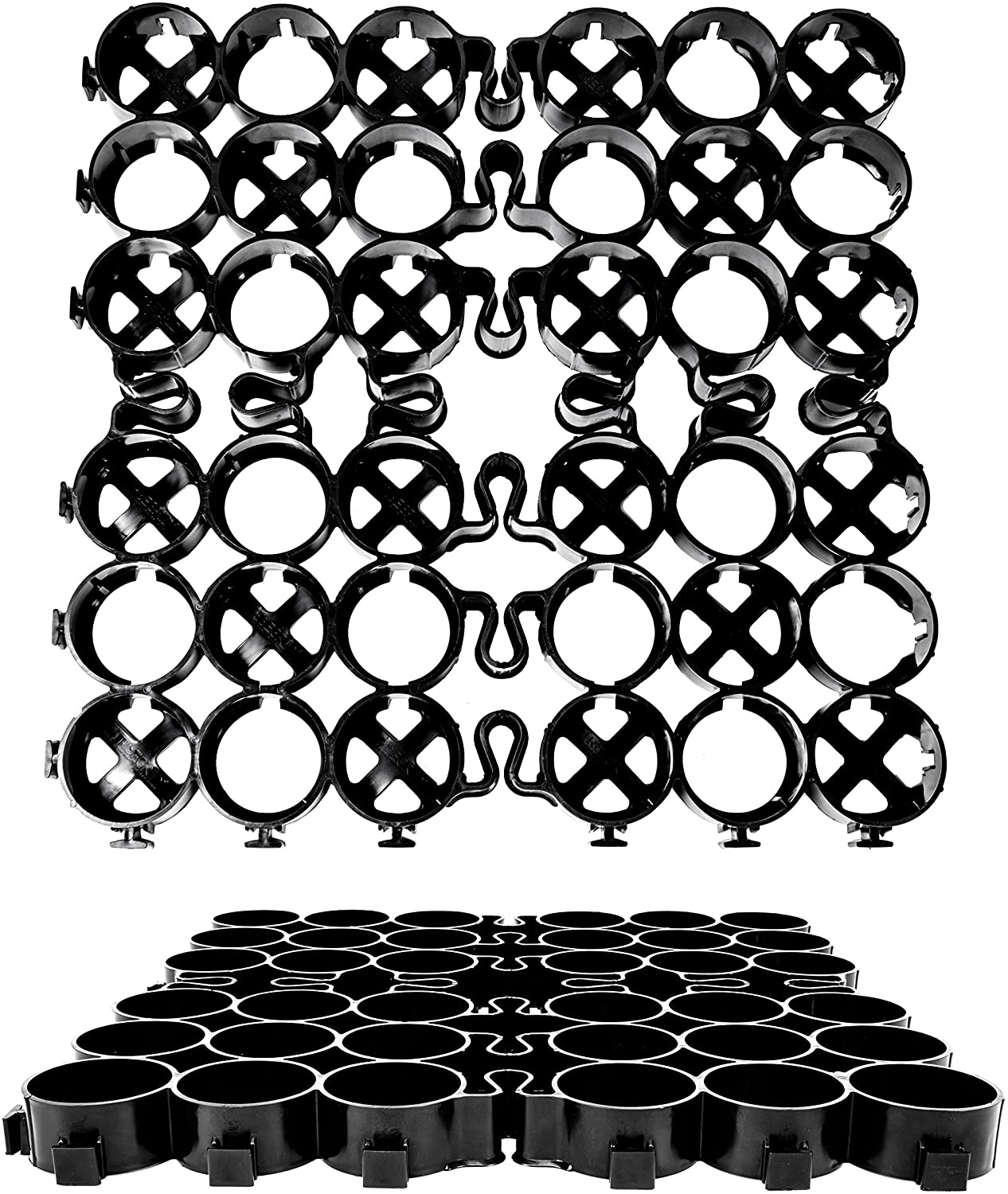
Heavy-duty industrial environments demand exceptional compressive and flexural strength. The TRUEGRID PRO PLUS S-Flex 48 is specifically engineered for these applications, with a compressive strength exceeding 8,000 psi when filled.
The grid’s double wall hoop strength and patented S-Flex joint design allow it to absorb both vertical and lateral stresses without cracking. This makes it suitable for dynamic loads from vehicles exceeding 20 tonnes per axle, including:
- Freight depots and distribution centres
- Truck parking and maintenance yards
- Container storage areas
- Waste management and recycling facilities
- Mining and energy infrastructure hardstands
The S-Flex joint system allows slight movement between panels, enabling the surface to flex under stress and adapt to soil movement. This prevents the brittleness that often leads to cracking in rigid pavements.
Stormwater and Environmental Performance
Unlike traditional impervious pavements that shed water, the TRUEGRID system allows rainfall to infiltrate through the surface into the aggregate base below. This acts as an on-site detention system, reducing surface runoff, peak flow rates, and pollutant loads.
Each cubic metre of base material can store up to 0.4 cubic metres of water, providing substantial temporary detention capacity. This performance not only helps meet Water Sensitive Urban Design (WSUD) requirements but also contributes to long-term site sustainability by recharging groundwater and mitigating flooding.
The system’s permeability also reduces the urban heat island effect, keeping hardstand areas cooler for workers and vehicles during summer. In industrial settings where dust and heat can affect operations, this can make a noticeable difference to site conditions.
Real-World Applications Across Australia
TRUEGRID’s performance in heavy-duty settings has been validated across numerous Australian projects:
- Stokes Wheeler Construction (QLD):
By using TRUEGRID PRO PLUS S-Flex 48, the company converted over 500 m² of restricted land into a functional, council-approved car park capable of supporting trucks and forklifts. The permeable surface met heavy load and stormwater permeability requirements simultaneously. - Rino Recycling, Pinkenba:
A trial installation demonstrated the grid’s effectiveness in managing dust and mud in high-traffic industrial yards. TRUEGRID reduced water usage for dust suppression while maintaining infiltration and durability under 42-tonne vehicles. - Heavy Vehicle Grass Access Road, Ipswich:
TRUEGRID PRO PLUS allowed a 40-tonne crane to operate on a stabilised grass surface without rutting or bogging, showing its versatility in sensitive or aesthetic environments.
These projects highlight how permeable pavements can perform as structural, compliant, and environmentally responsible alternatives to conventional materials.
Advantages for Industrial and Commercial Yards
Choosing a permeable hardstand solution provides multiple long-term advantages:
- Load-bearing strength equal to or exceeding concrete.
- Reduced runoff and flooding risk through natural infiltration.
- Lower heat absorption and improved site comfort.
- Minimal maintenance – no cracking, potholes, or dust formation.
- Sustainability credentials, including 100% recycled HDPE and GECA certification.
- Faster installation with no curing time or complex machinery required.
- Lower cost than traditional surface installs
Conclusion: Building Stronger, Smarter Hardstands
For industrial and logistics facilities, the balance between performance, compliance, and sustainability is more important than ever. TRUEGRID® permeable pavers offer a proven, engineered solution for heavy-load environments where traditional pavements fall short.
By combining correct base preparation practices with advanced permeable paving technology, contractors can deliver long-lasting hardstands and truck yards that perform under pressure, manage water intelligently, and support a more sustainable future for Australia’s industrial sector.


