


Pavement design and construction have long been dominated by asphalt and concrete – materials that prioritised strength and availability over environmental performance. However, as Australia moves toward net-zero carbon targets and circular economy principles, the future of pavement materials is undergoing rapid transformation.
The conversation is no longer just about durability and cost. It’s about reducing embodied carbon, enhancing permeability, and reusing materials that would otherwise contribute to waste streams. Across councils, infrastructure agencies, and private developments, the demand for smarter, more sustainable surfacing solutions is reshaping the way we build and maintain roads, car parks, and hardstands.
In this evolving landscape, TRUEGRID®, an Australian-made permeable paving system produced from 100% recycled plastic, represents a new generation of pavement innovation one that unites engineering performance with environmental accountability.
Rethinking Pavements: From Hard Infrastructure to Sustainable Systems
For decades, road and pavement materials were chosen primarily for load-bearing strength and longevity. While these qualities remain vital, the sustainability impacts of traditional materials are now impossible to ignore.
- Concrete production accounts for roughly 8% of global CO₂ emissions, largely from cement manufacturing.
- Asphalt relies on petroleum-based bitumen, contributing to fossil fuel demand and embodied carbon.
- Both materials are impermeable, intensifying urban flooding, heat island effects, and stormwater pollution.
As climate resilience and circular design become embedded in Australian infrastructure policy, innovation in pavement materials is accelerating. Future-ready pavements must be:
- Low-carbon in both production and maintenance.
- Recyclable or made from recycled materials.
- Permeable to support natural hydrology and heat mitigation.
- Flexible and adaptive to shifting ground conditions.
These principles are driving investment in new material technologies – from recycled polymers to geopolymer concretes and modular grid systems.
The Rise of Recycled and Modular Paving Solutions
Australia generates millions of tonnes of construction and demolition waste annually. Increasingly, this waste stream is being seen not as landfill but as a resource. Recycled glass, reclaimed asphalt, crushed concrete, and post-consumer plastics are all finding new life as pavement materials.
Among these, plastic-based modular paving systems have become one of the most versatile and rapidly adopted innovations. Unlike conventional rigid pavements, modular grids distribute loads evenly while allowing water, air, and heat to move freely through the surface.
This shift aligns closely with national and local sustainability strategies:
- Circular Economy Policies: Encouraging reuse and remanufacturing of materials.
- Water Sensitive Urban Design (WSUD): Prioritising permeability to reduce runoff and flooding.
- Sustainable Procurement: Mandating recycled content in public infrastructure projects.
TRUEGRID® sits at the intersection of these objectives – combining recycled content, permeability, and structural performance in a single, modular system.
TRUEGRID®: Turning Recycled Plastic into Infrastructure
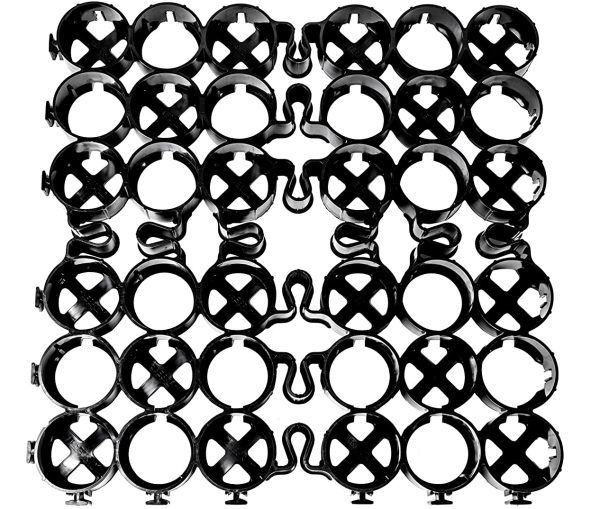
TRUEGRID® is an Australian-made permeable paving system engineered from 100% post-consumer recycled HDPE (high-density polyethylene). This material, sourced from waste streams such as containers and industrial packaging, is diverted from landfill and transformed into durable, interlocking grids that can support both light and heavy-duty applications.
The system’s design provides compressive strength exceeding 8,000 psi when filled, equivalent to or greater than many rigid pavements.
Beyond strength, TRUEGRID® offers several key innovations that make it a defining product in the next generation of sustainable pavements:
- Full Permeability – Water passes directly through the surface into the subgrade, supporting infiltration, detention, and stormwater quality objectives.
- Flexible Engineering – The S-Flex joint system allows for ground movement without cracking or separation, making it ideal for reactive soils and flood-prone areas.
- Reusability – TRUEGRID® can be lifted and reinstalled, extending its life cycle and reducing waste at end of use.
- Australian Manufacture – Local production in Queensland shortens supply chains, reduces transport emissions, and supports the domestic recycling industry.
These characteristics make TRUEGRID® a strong example of how material innovation can achieve both technical reliability and environmental performance.
From Waste to Worth: The Carbon Advantage
Every square metre of TRUEGRID® represents kilograms of recycled plastic removed from the waste stream. This reduces demand for virgin polymers and offsets the embodied carbon of traditional materials such as concrete and asphalt.
A lifecycle assessment of permeable recycled systems typically shows:
- Up to 80% reduction in embodied carbon compared with concrete pavements.
- Significant water management benefits, reducing the energy and infrastructure needed for stormwater treatment.
- Longer service life with minimal maintenance, lowering emissions from resurfacing or repair.
By turning waste into a long-term infrastructure solution, TRUEGRID® contributes directly to Australia’s National Waste Policy and the broader goal of reducing emissions through circular design.
Practical Applications: Where Innovation Meets Everyday Use
While TRUEGRID®’s sustainability credentials are strong, its widespread adoption is being driven by practicality. The system performs across diverse applications – from commercial and industrial sites to residential developments and council projects.
Common uses include:
- Car parks and access roads – Offering load-bearing capacity for vehicles up to 40 tonnes.
- Tree protection and root zones – Preventing compaction while maintaining permeability.
- Public open spaces – Providing durable yet natural-looking surfaces that integrate with green landscapes.
- Industrial yards and logistics depots – Withstanding high traffic while reducing dust and maintenance.
- Residential driveways and verges – Bringing commercial-grade strength and stormwater benefits to homes.
TRUEGRID®’s modular format also simplifies retrofitting projects. Ageing concrete or asphalt surfaces can be replaced with minimal excavation, lowering both cost and environmental impact.
The Broader Future of Pavement Materials
The future of pavements is being shaped by three converging forces: innovation, regulation, and resource efficiency. Emerging trends include:
- Bio-based Binders: Replacing petroleum-derived bitumen with renewable alternatives.
- Photocatalytic Concretes: Materials that absorb pollutants from the air.
- Smart Pavements: Embedded sensors that monitor load and temperature conditions.
- Hybrid Permeable Systems: Combining grid structures with vegetation for carbon sequestration and urban cooling.
As these technologies evolve, the role of proven, scalable systems like TRUEGRID® will be to complement and integrate them – providing a stable, sustainable foundation for next-generation urban infrastructure.
Building a Circular Future from the Ground Up
The shift toward sustainable pavement materials reflects a deeper change in how Australia approaches infrastructure. Roads, car parks, and hardstands are no longer seen as static surfaces but as components of living systems – filtering water, supporting vegetation, and recycling materials.
TRUEGRID® exemplifies this transformation. By converting waste into value, improving permeability, and extending pavement lifecycles, it bridges the gap between traditional engineering and environmental stewardship.
As local councils, developers, and contractors continue to pursue carbon reduction and circular economy goals, TRUEGRID® is proving that the future of pavements isn’t just about what we build – it’s about how we reuse, rethink, and regenerate the materials that make up our cities.


