

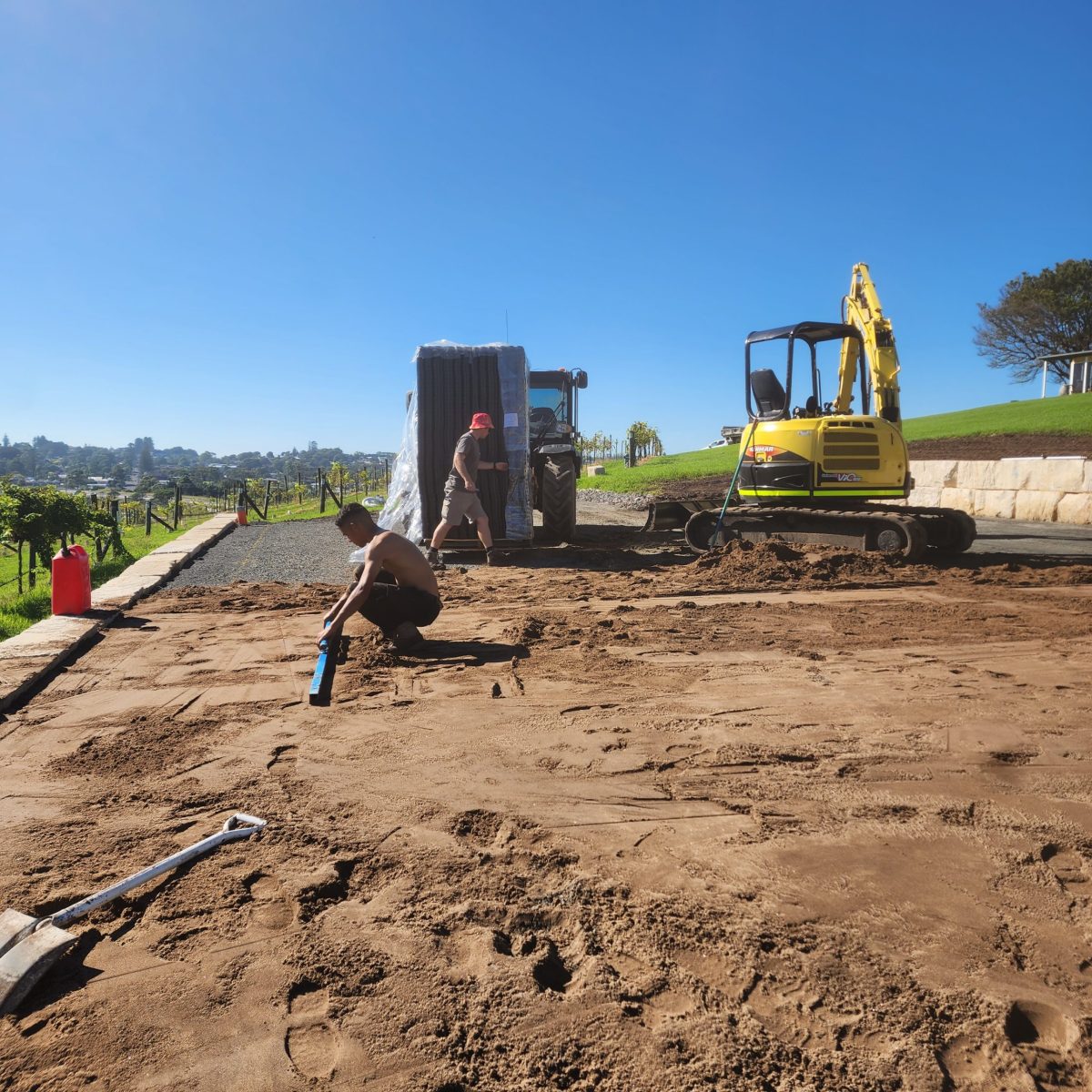
As Australian cities evolve, councils are seeking smarter, more sustainable ways to manage urban growth. Traditional stormwater infrastructure – dominated by underground pipes, detention tanks, and impervious pavements is increasingly being replaced by systems that work with nature rather than against it.
This shift is known as Low Impact Development (LID), an approach that integrates water management into the built environment to reduce runoff, improve water quality, and enhance resilience. Across Australia, councils are adopting LID principles to meet Water Sensitive Urban Design (WSUD) and climate adaptation goals.
One of the most effective and practical LID tools in municipal infrastructure is permeable paving, particularly systems such as TRUEGRID®, which provide durable, compliant, and environmentally responsible alternatives to traditional asphalt or concrete surfaces.
This article explores how LID principles are being applied in Australian council projects – and how TRUEGRID® permeable paving supports sustainable outcomes through real-world case studies.
Understanding Low Impact Development (LID)
LID is a design philosophy that seeks to manage rainfall where it falls. Instead of rapidly channelling water away from developed sites, LID aims to infiltrate, store, and reuse water at the source.
Key objectives of LID include:
- Reducing impervious surfaces and increasing infiltration.
- Improving stormwater quality by filtering pollutants before discharge.
- Enhancing urban resilience to flooding and drought.
- Restoring natural hydrology disrupted by urbanisation.
In practice, this means replacing or supplementing traditional hard infrastructure with features such as permeable pavements, vegetated swales, rain gardens, and detention basins.
Among these measures, permeable paving systems have gained significant traction for municipal car parks, accessways, and event spaces, where councils must balance functionality, durability, and compliance with stormwater management policies.
TRUEGRID® and the LID Approach
TRUEGRID® permeable pavers are designed to align perfectly with LID principles. Manufactured from 100% recycled high-density polyethylene (HDPE), the system provides a fully trafficable, permeable surface that allows stormwater to infiltrate directly through the pavement into an open-graded stone base below.
The system’s structure provides both load-bearing strength and subsurface water detention, reducing the need for separate drainage or detention basins. TRUEGRID’s PRO PLUS S-Flex 48 model, for instance, delivers a compressive strength exceeding 8,000 psi when filled, making it suitable for council car parks, shared pathways, and even heavy vehicle access roads.
By replacing impervious surfaces with permeable, structural pavements, councils can achieve multiple outcomes simultaneously – improved drainage, compliance with WSUD frameworks, reducing the temperature of water at the discharge point and measurable sustainability gains.

Case Study 1: Tallebudgera Pony Club – Gold Coast City Council
The Tallebudgera Pony Club project exemplifies how LID principles can resolve long-standing flooding and access challenges in public recreation facilities. The club’s car park was located in a floodplain and frequently became unusable after rainfall. Council requirements prohibited raising ground levels or changing natural drainage paths.
The solution involved installing TRUEGRID® PRO PLUS S-Flex 48 over a 150 mm road base on geofabric, creating a flood-resilient parking area that maintained infiltration and stability under heavy vehicles such as horse floats and 4x4s.
Outcomes achieved:
- Compliance with council floodplain regulations.
- Continuous usability during wet weather.
- On-site detention and infiltration without excavation or level change.
This project demonstrates how permeable paving can enable LID outcomes – infiltration, detention, and flood resilience within strict regulatory and site constraints.
Case Study 2: Capalaba Sports Club – Redland City Council
At Capalaba Sports Club, a new car park was required around established trees. Arborists recommended avoiding any earthworks to protect root systems, while engineers needed a stable surface with adequate drainage.
The design team selected TRUEGRID® PRO PLUS S-Flex 48, installed directly over natural ground with a geofabric separator. The permeable pavement allowed water to infiltrate through the surface and drain naturally through adjacent garden beds.
Outcomes achieved:
- Zero ground disturbance in tree protection zones.
- Compliance with accessibility and stormwater standards.
- Long-term stability with minimal maintenance.
This project highlights TRUEGRID’s flexibility in protecting sensitive ecological assets a core principle of Low Impact Development.
Case Study 3: Avalon Beach Boat Ramp – City of Greater Geelong
The Avalon Beach Boat Ramp upgrade presented a unique challenge: the site sits within a Ramsar-protected coastal wetland. The existing overflow parking area experienced frequent inundation and runoff contamination from loose gravel.
TRUEGRID® permeable pavers were installed as part of a collaborative design by Water Technology and Better Boating Victoria to replicate the site’s natural infiltration while stabilising the surface for vehicles.
Outcomes achieved:
- Reduction in sediment and pollutant runoff to sensitive marine environments.
- Improved permeability and drainage in low-lying soils.
- Compliance with environmental protection and coastal management regulations.
By managing runoff through infiltration rather than hard drainage, this project embodies the essence of LID – integrating development with natural hydrology.
How LID and Permeable Paving Support Council Goals
For councils across Australia, LID adoption provides a pathway to meet several critical objectives:
- Stormwater Compliance: TRUEGRID® surfaces act as on-site detention systems, reducing runoff peaks and supporting WSUD benchmarks.
- Climate Resilience: By increasing infiltration and reducing flooding, councils can build resilience against changing rainfall patterns.
- Urban Heat Reduction: TRUEGRID® surfaces promote air flow and limit heat absorption compared to asphalt, creating cooler, more comfortable environments.
- Sustainability and Circular Economy: Each TRUEGRID® installation diverts post-consumer plastic from landfill and supports local recycling industries, aligning with council sustainability frameworks.
- Cost Efficiency: With rapid installation and low maintenance requirements, TRUEGRID® offers a cost-effective LID solution for retrofits and new developments alike.
Implementing LID in Municipal Projects
Successful Low Impact Development projects require coordination between engineers, landscape architects, and environmental officers. TRUEGRID® supports this process with technical documentation, RPEQ-certified design data, and GECA environmental certification, ensuring compliance with council design standards and tender requirements.
Installation is straightforward, with interlocking panels that can be laid by hand and filled with gravel or grass depending on site use. The system can be combined with vegetated swales, infiltration trenches, or rain gardens for enhanced water management.
A Proven Path to Sustainable Municipal Design
Low Impact Development represents the future of municipal infrastructure – blending engineering function with environmental care. TRUEGRID® permeable paving systems provide a reliable, proven way for councils to implement LID principles on roads, car parks, and community spaces without compromising usability or durability.
By enabling detention, infiltration, and pollution control within the pavement structure itself, TRUEGRID® helps local governments transform everyday infrastructure into climate-resilient assets.
From flood-prone recreation facilities to coastal car parks and urban tree zones, TRUEGRID® continues to demonstrate how practical design innovation can deliver genuine sustainability benefits for Australian communities.


