

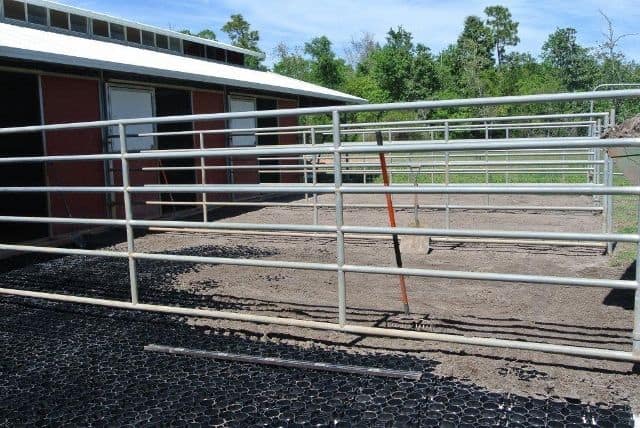
Modern soil stabilisation grids are transforming how engineers, developers and asset managers strengthen ground profiles across Australia. These systems create a stable surface across just about any type of terrain, from soft soils and coastal sands to challenging ground and geological conditions found throughout the Gold Coast and regional environments.
Using engineered high density polyethylene structures, soil stabilisation grids act as a substrate stabiliser, distributing weight, limiting vertical movement, and providing increased load support across areas that would otherwise suffer from soil subsidence, rutting or deformation. Their value extends across construction projects, civil infrastructure, car parks, commercial parking lots and general-purpose outdoor spaces that experience regular traffic.
Why Soil Stabilisation Grids Offer Better Ground Performance
A key benefit of soil stabilisation grids is their ability to deliver reliable erosion control and help prevent soil erosion in environments where weather, slope, water or poor drainage would otherwise cause problems.
Soil stabilisation grids create a strengthened, stiffened base layer that improves ground performance in ways traditional methods cannot.
Core advantages include:
- High load bearing capacity to manage heavy vehicles and machinery
- Ability to withstand loads and even withstand heavy loads without deformation
- A permeable surface that reduces stormwater runoff and supports effective stormwater management
- A structure that mitigates erosion, improves drainage and enhances on-site safety
- Reduced weed growth by controlling soil movement and limiting disturbance
- Compatibility with numerous soil and substrate types
These benefits make the system capable of supporting heavy loads in areas that would otherwise require extensive excavation or concrete reinforcement.

TRUEGRID PRO PLUS S-FLEX 48 – High-Strength Stabilisation for All Ground Conditions
For challenging ground profiles, high traffic zones and water-affected sites, TRUEGRID PRO PLUS S-FLEX 48 is the leading option for full-strength soil stabilisation. Engineered for heavy-duty applications, PRO PLUS increases load bearing capacity and provides long-lasting stability across construction projects, industrial yards, car parks and parking lots.
Key advantages:
-
Designed for sites carrying heavy loads and machinery movements
-
High-performance HDPE structure that forms a stiffened base layer
-
Controls lateral movement, displacement and shearing under traffic
-
Creates a permeable surface that supports drainage and reduces stormwater runoff
-
Works across just about any type of soil and substrate types, including poor drainage areas
-
Installs efficiently using lightweight panels, reducing project costs
For sites that require maximum structural integrity, resistance to vertical movement, erosion protection and long-term durability, PRO PLUS remains the most resilient and reliable grid system available.
Strength, Stability and Structural Integrity
Soil stabilisation grids offer one of the most reliable ways to protect the structural integrity of a site. Their interlocking lightweight panels spread pressure evenly across the surface and limit lateral displacement.
This performance is enhanced by:
- Controls shearing during turning movements and braking
- Confinement of the infill material, whether gravel, sand or soil
- A design that prevents rutting by stabilising the subsurface
- Consistent performance across challenging geological conditions
In practice, this means a surface that can handle high traffic volumes, vehicle loads and operational activities while remaining stable.
Gravel Grids for High-Load Areas
When used as gravel grids, soil stabilisation products help lock stone in place, eliminating migration and creating reliable permeable paving alternatives for parking lots, access roads, depot yards and work zones.
Benefits include:
- Better traction under heavy vehicles
- Dramatic reduction of potholes and depressions
- Lower long-term project costs due to minimal maintenance
- Lower dust levels and better filtration across the surface
Gravel grids also decrease quantity of imported aggregate required, making them a more cost effective substitute for rigid pavements.
Reducing Environmental Impact and Urban Heat
Soil stabilisation grids sit within the surface, allowing vegetation or gravel to dominate the visual profile. This creates a cooler ground finish that reduces the urban heat island effect and helps landscapes blend into their natural settings.
The systems also support water infiltration by maintaining a permeable surface, which absorbs rainfall rather than sending it directly into drainage channels. This protects ecosystems from excess runoff and reduces the strain on local drainage networks.
By contrast, concrete and asphalt generate higher temperatures, increase runoff volumes and amplify erosion without offering the adaptability needed for softer ground types.
Suitable for a Wide Range of Applications
Soil stabilisation grids work across many site types, particularly where the ground profile needs reinforcement without rigid construction.
They suit:
- Car parks and parking lots with daily traffic
- Transport yards and equipment depots
- Steep or sloped areas requiring an erosion control system
- Areas with poor drainage
- Road shoulders, verge strengthening and open outdoor spaces
- Water-sensitive environments prone to soil erosion
Across these projects, installation can be laid quickly, remains easy to install, and can be completed cost efficiently.
Improving Ground Performance Across Australia
Whether used across the Gold Coast, rural zones or urban developments, soil stabilisation grids create stable, resilient surfaces that hold up in Australia’s diverse environmental conditions. With capacities measured by the square metre, these systems deliver a high maximum load bearing capacity without the excessive excavation or maintenance typically associated with concrete.
They offer dependable support for light vehicles, commercial parking lots, emergency access routes and large-scale construction. Most importantly, they provide predictable behaviour across varied substrate types, making them a long-term solution for Australian ground reinforcement.
Final Thoughts
Soil stabilisation grids offer more than surface strength. They protect landscapes, support sustainability goals, and reduce costs for developers and councils managing traffic-bearing areas. With benefits spanning erosion control, improved drainage, stable groundwork and long-term durability, they remain one of the most effective upgrades for strengthening ground performance across Australia.


