

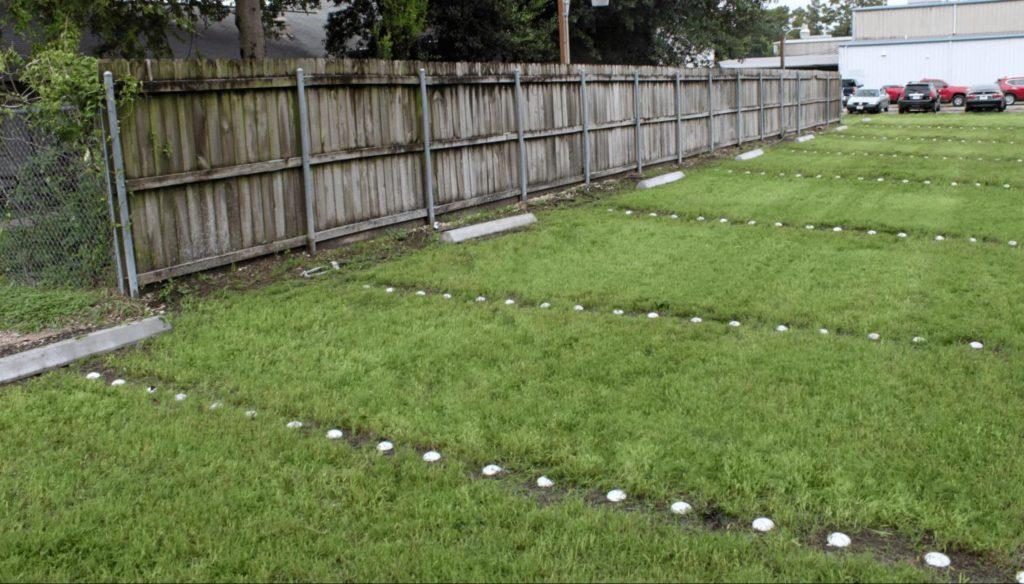
Designing vehicle access and parking areas within conservation or environmentally sensitive zones requires a delicate balance between functionality and ecological preservation. These sites often include protected vegetation, established root systems, and soil conditions that cannot tolerate conventional excavation or compaction. Achieving stable access while maintaining permeability and root health demands innovation in pavement technology.
Permeable paving systems, such as TRUEGRID®, have emerged as practical, environmentally aligned solutions for projects where traditional hardstand surfaces are not suitable. A recent Australian case study demonstrates how TRUEGRID® was successfully implemented within a conservation site to provide car parking and root zone stabilisation without disturbing the existing ecosystem.
The Challenge: Access Without Disturbance
Conservation sites are defined by their ecological value. They may contain heritage-listed vegetation, remnant ecosystems, or sensitive soils that cannot be compacted or sealed. When these areas require public access – such as visitor car parks, service tracks, or maintenance bays – traditional materials like asphalt or concrete are unsuitable.
The main challenges in such contexts typically include:
- Root protection: Tree root zones must remain uncompacted and aerated to preserve tree health.
- Stormwater management: Surfaces must allow infiltration to prevent erosion and protect downstream waterways.
- Visual integration: The site’s natural character should be retained, avoiding urban visual intrusion.
- Load-bearing performance: The surface must still support cars, service vehicles, or emergency access in all weather conditions.
Meeting these conflicting requirements often leads design teams toward permeable, low-impact solutions that combine strength with environmental sensitivity.
The TRUEGRID® Approach: Structural Permeability
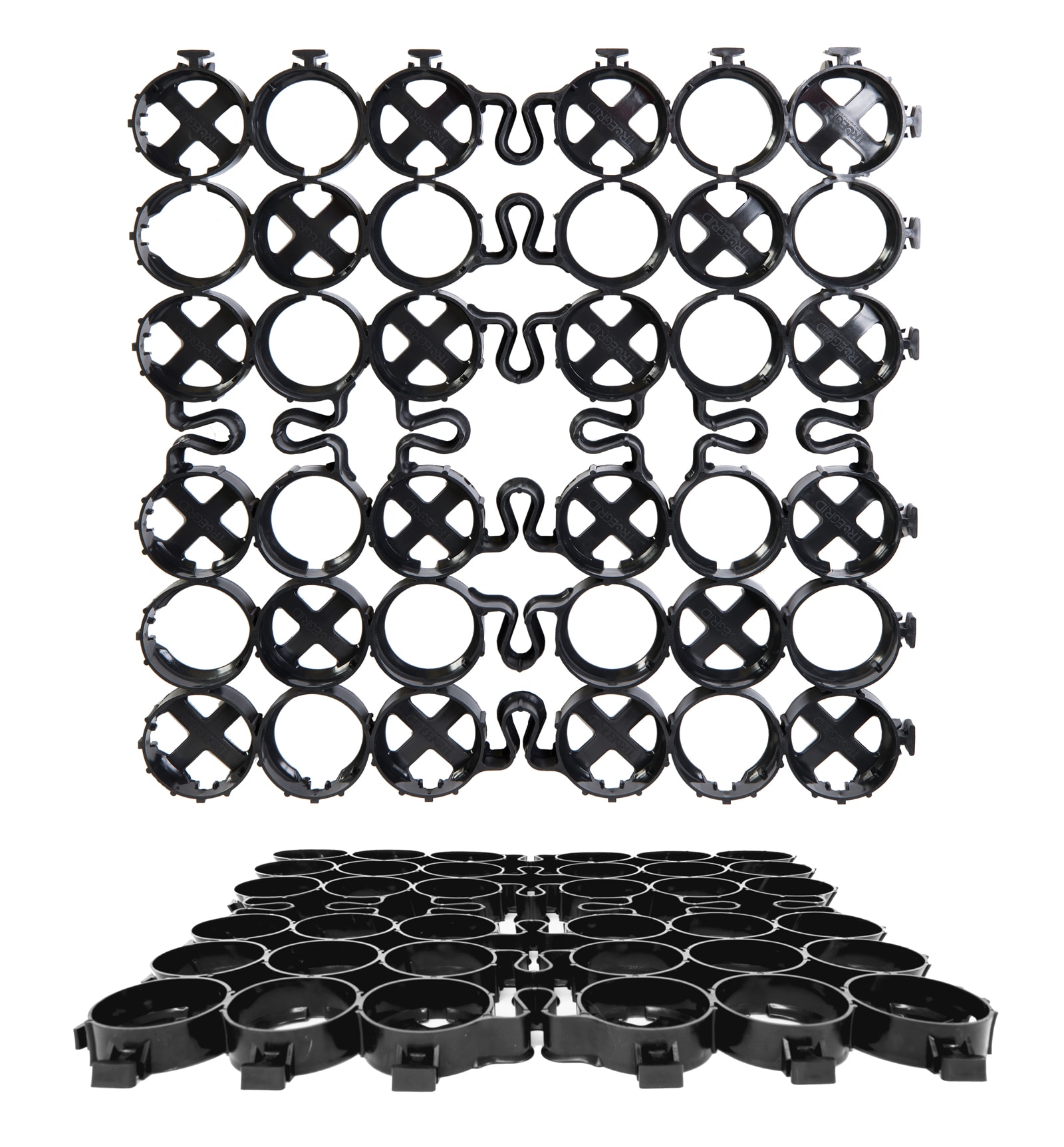
TRUEGRID® permeable paving systems are manufactured from 100% recycled high-density polyethylene (HDPE), forming a durable grid structure that can be filled with gravel, soil, or turf. The open-cell design allows water and air to move freely through the surface while providing load-bearing support equivalent to rigid pavements.
For conservation applications, the TRUEGRID® PRO PLUS® S-Flex 48 system is particularly effective. It features:
- Compressive strength exceeding 8,000 psi when filled, ensuring suitability for both light vehicles and maintenance trucks.
- S-Flex expansion joints that accommodate natural soil movement and thermal variation.
- Full permeability, allowing infiltration rates that exceed heavy rainfall intensities.
- Minimal excavation requirements, protecting root systems and soil microbiota during installation.
This combination of strength, flexibility, and permeability makes TRUEGRID® ideal for stabilising soils in root zones where compaction is prohibited under arboricultural or environmental management plans.
Case Study: Turtle Sands Holiday Park, Mon Repos Conservation Area
The NRMA Turtle Sands Holiday Park project in Mon Repos, Queensland, illustrates how TRUEGRID® can provide vehicle access and parking within a conservation site while meeting strict environmental controls.
Site Context
The park sits adjacent to the Mon Repos Turtle Centre – a globally significant turtle conservation area and nesting site. The development required internal access roads, caravan bays, and visitor parking areas, but council conditions stipulated that no surface runoff could alter the existing groundwater pathways feeding the protected wetlands.
Design Challenge
The design team faced three core challenges:
- Preserving natural infiltration: The existing sandy subgrade directed water toward protected wetland zones. Impervious materials would have disrupted this flow.
- Protecting root systems and native vegetation: The site contained coastal vegetation with shallow root structures that could not tolerate compaction.
- Meeting accessibility and load requirements: The surface had to comply with NDIS accessibility standards and support vehicles such as buses and garbage trucks.
Implementation
After consultation with engineers and environmental specialists, TRUEGRID® PRO PLUS® S-Flex 48 was chosen for the car parking and internal roadways. The pavers were laid directly over the sandy base with minimal excavation. A combination of geofabric and graded sand ensured stability while maintaining infiltration.
The project utilised a mix of sand-filled and gravel-filled grids to differentiate between accessible pathways and drive-on areas. Importantly, the system allowed water to pass through the surface uninterrupted, preserving the site’s natural hydrological patterns.
Outcomes
- Stormwater Compliance: TRUEGRID® met the site’s stringent infiltration requirements, ensuring groundwater continued to flow into the conservation wetland.
- Root Zone Protection: The minimal-disturbance installation preserved root structures and avoided compaction.
- Durability: The completed surface withstood heavy use from caravans, buses, and service vehicles without deformation.
- Visual Integration: The neutral tones of the gravel fill complemented the natural environment, avoiding the harsh appearance of asphalt.
The project was completed in 2024 and has since operated successfully through multiple wet seasons, confirming the long-term performance of the permeable system in a coastal conservation setting.
Lessons for Conservation and Council Projects
The Turtle Sands case underscores several key principles for designing access and parking areas within conservation or tree-protection sites:
1. Design for Hydrological Continuity
Preserve natural water movement through infiltration rather than runoff. Permeable paving acts as a detention layer, filtering and slowing stormwater while maintaining soil moisture balance.
2. Protect Roots, Don’t Compact Them
Use grid systems to distribute vehicle loads across the surface instead of densifying soil. This maintains pore space and oxygen availability for root respiration.
3. Simplify Construction to Reduce Disturbance
TRUEGRID® can be installed with standard equipment and minimal excavation, reducing root damage and sediment mobilisation.
4. Integrate Aesthetics with Ecology
In conservation and recreational areas, permeable systems allow for a softer, more natural appearance compared with concrete or bitumen. Grass or light-coloured aggregates can help the surface blend with its surroundings.
5. Support Policy and Compliance Goals
TRUEGRID® systems align with Water Sensitive Urban Design (WSUD) and environmental planning requirements. Their use of recycled materials also supports council sustainability frameworks and GECA certification standards.
Environmental and Operational Advantages
Beyond their ecological benefits, TRUEGRID® systems also deliver long-term operational value:
- Reduced Maintenance: Unlike loose gravel or unsealed roads, TRUEGRID® prevents rutting and erosion, minimising regrading and water truck use.
- Temperature Regulation: Permeable surfaces remain cooler than asphalt, protecting shallow-rooted species from heat stress.
- Adaptability: Grids can be removed and reused for future redevelopment, making them suitable for adaptive management of conservation areas.
- Lifecycle Performance: With a design life exceeding 40 years, the system provides durable, low-impact infrastructure suitable for remote or sensitive environments.
Conclusion: Designing for Resilience and Respect
Conservation and heritage landscapes demand design solutions that respect the living systems they serve. The TRUEGRID® installation at Mon Repos demonstrates that with careful specification, it is possible to create functional car parking and access roads that work with nature, not against it.
By combining high structural capacity with permeability, TRUEGRID® supports a new standard in sustainable infrastructure – one where ecological integrity and engineering performance are equally valued.
As councils and developers continue to navigate the intersection of environmental protection and public access, projects like Turtle Sands highlight a clear message: with the right materials, it’s entirely possible to stabilise the ground without compromising what’s growing beneath it.


