


Urban heat is one of the most pressing environmental challenges faced by cities today. Expanses of concrete, asphalt, and other impervious surfaces absorb and trap heat, leading to the phenomenon known as the Urban Heat Island (UHI) effect. In densely built environments, surface temperatures can be several degrees higher than surrounding rural areas, exacerbating energy demand, air pollution, and heat-related health risks.
Local councils, developers, and urban designers are increasingly turning to tree canopy expansion and permeable paving systems as practical ways to combat these temperature rises. When combined, these two strategies create cooler, more liveable urban environments.
This article explores how permeable interlocking paving systems – such as TRUEGRID® – can be integrated into tree-canopy zones to reduce heat retention, improve stormwater performance, and support long-term urban cooling strategies.
Understanding the Urban Heat Island Effect
Urban Heat Islands develop when natural ground surfaces are replaced with impermeable materials such as concrete, asphalt, and metal. These materials absorb and store solar radiation during the day and release it slowly at night, preventing urban areas from cooling naturally.
The key drivers include:
- Impervious surfaces: Pavements and roads prevent natural infiltration and hold heat.
- Reduced vegetation: Fewer trees mean less shading and evapotranspiration (the natural cooling process of plants).
- Waste heat: Vehicles, air conditioning units, and industrial activity add additional heat to the environment.
The result is a measurable temperature difference between urban cores and surrounding green or rural areas – often 4–10°C higher.
This increased heat load impacts not just comfort but also infrastructure resilience, water quality, and energy consumption. As cities across Australia work toward climate adaptation targets, reducing impervious surfaces has become a high-priority objective.
Why Tree Canopies Alone Are Not Enough
Urban forestry programs across Australia have expanded rapidly in the past decade, with councils such as Brisbane, Melbourne, and Sydney aiming for canopy coverage targets of 30–40%. However, trees alone cannot solve the heat problem if the surfaces beneath them remain sealed and heat-retentive.
Traditional pavements surrounding street trees often work against canopy performance by:
- Raising localised ground temperatures.
- Compacting soils and limiting water infiltration.
- Restricting oxygen exchange to roots.
- Increasing surface runoff that washes away vital nutrients.
For tree canopies to thrive and deliver their full cooling potential, the microclimate at the root zone must remain healthy, aerated, and hydrated. That’s where permeable interlocking systems come in – they provide a structural, load-bearing surface while maintaining permeability and thermal regulation.
The Role of Permeable Interlocking Systems
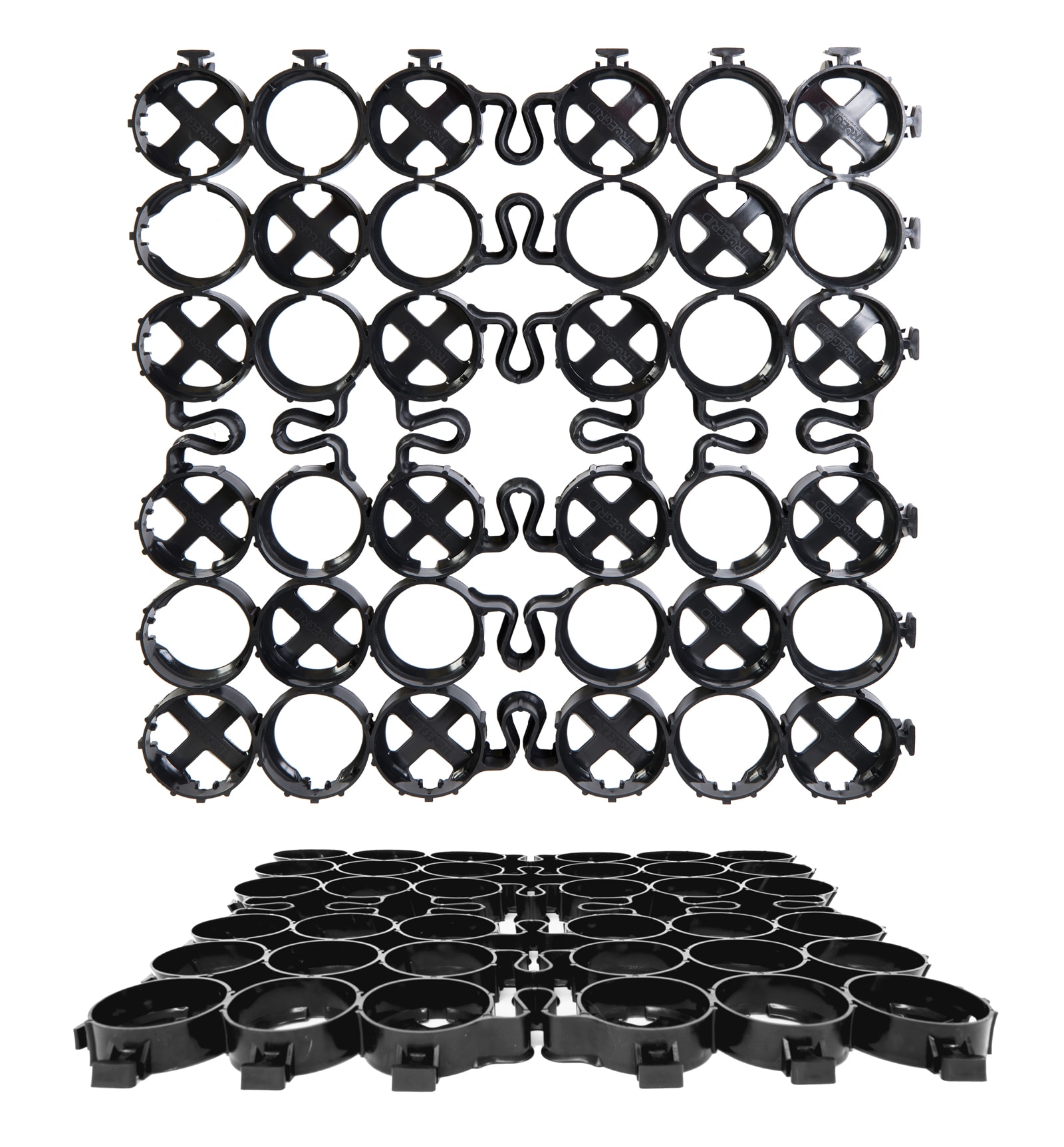
Permeable paving systems such as TRUEGRID® address two major contributors to urban heat: surface temperature and hydrological imbalance. Unlike asphalt or concrete, permeable grids allow water, air, and heat to move naturally between the surface and subgrade.
How permeable systems mitigate heat:
- Reduced Surface Heat Storage: The void spaces and lighter-coloured infill materials reflect rather than absorb solar radiation.
- Evaporative Cooling: Moisture retained in the subgrade evaporates through the grid system, cooling the surrounding air.
- Healthy Root Environments: By maintaining permeability, roots can grow closer to the surface, where they support canopy expansion and transpiration.
- Infiltration and Ground Moisture Retention: Stormwater is absorbed rather than running off, keeping soils cooler and reducing heat buildup in adjacent pavements.
These features collectively lower surface and ambient temperatures, especially in shared-use zones, car parks, pathways, and tree protection areas where vegetation interacts directly with built infrastructure.
TRUEGRID®: Engineering for Performance and Cooling
TRUEGRID® permeable interlocking systems have been designed to meet both civil engineering standards and environmental performance goals. Made from 100% recycled high-density polyethylene (HDPE), TRUEGRID® systems are both durable and sustainable, with models suitable for light residential through to heavy industrial use.
The TRUEGRID® PRO PLUS® S-Flex 48 model has a compressive strength exceeding 8,000 psi when filled, making it suitable for car parks, tree protection zones, and street verge applications.
Key features relevant to reducing heat-island impact include:
- High Permeability: Allows rainwater infiltration, maintaining cooler, moist subsurface conditions.
- Reflective Surface Options: When filled with light-coloured gravel or turf, surface albedo increases, reducing radiant heat absorption.
- Stormwater Detention Capacity: Functions as a micro water-storage layer, enhancing evaporative cooling.
- Flexibility: Accommodates root growth and natural soil movement without cracking or separation.
These attributes make TRUEGRID® ideal for council projects that integrate tree canopies, green verges, and urban cooling corridors.
Case Study: Tree Protection and Urban Cooling in Practice
TRUEGRID® has been successfully applied in projects across Australia where tree canopy health and urban cooling were key objectives.
At the Capalaba Sports Club in Queensland, engineers were tasked with creating a parking area within an established tree protection zone. Conventional hardstand was ruled out due to root compaction risks and heat concerns. Instead, TRUEGRID® PRO PLUS S-Flex 48 was installed over existing ground with no excavation, filled with free-draining gravel.
The result was a stable, all-weather parking surface that:
- Preserved tree roots by preventing compaction.
- Allowed infiltration and aeration beneath the canopy.
- Maintained cooler surface temperatures compared to adjacent asphalt.
- Enhanced canopy vitality by improving subsurface moisture and temperature stability.
This case demonstrates how permeable systems can meet engineering demands while actively supporting the environmental functions of urban trees.
Integrating Permeable Pavements into Council Urban Cooling Strategies
For councils and developers working on street upgrades, public car parks, or civic plazas, adopting permeable pavement systems supports multiple policy outcomes:
- Urban Heat Mitigation: By lowering surface temperatures, TRUEGRID® contributes to cooler pedestrian environments.
- Water Sensitive Urban Design (WSUD): TRUEGRID® aligns with stormwater quality and detention goals by facilitating infiltration.
- Tree Protection Compliance: Meets AS 4970: Protection of Trees on Development Sites, which restricts soil compaction within TPZs.
- Sustainable Procurement: Made in Australia from recycled materials, TRUEGRID® is GECA certified and contributes to Green Star rating credits.
- Maintenance Efficiency: The surface requires minimal upkeep and eliminates water use for dust suppression or cleaning.
By implementing these systems within tree-lined streets, community car parks, and public open spaces, councils can extend canopy longevity and deliver measurable reductions in localised heat intensity.
A Cooler, Greener Future
As cities adapt to the realities of climate change, integrating vegetation with high-performance pavements will define the next generation of urban design. Tree canopy areas are not just aesthetic features – they are critical cooling systems. However, without supportive surface technologies beneath them, their potential is diminished.
TRUEGRID® demonstrates how thoughtful engineering can complement ecology. By combining load-bearing performance with permeability, flexibility, and reduced heat absorption, it enables cities to function efficiently while remaining comfortable and resilient.
Reducing the urban heat-island effect is not a single-solution challenge. It requires systems thinking – and permeable interlocking systems like TRUEGRID® offer one of the most practical, scalable tools available for creating cooler, greener, and more sustainable cities.


